Maintenance Articles

Practical guides to help you understand your vehicle and make informed decisions about its care.

Automotive workshop

Understanding Preventative Maintenance

Preventative maintenance is one of those topics that sounds straightforward until you start asking why each item on a service schedule is there in the first place. Most drivers know they should change their oil and rotate their tires, but far fewer understand what those actions are actually preventing or why the intervals exist.

This article takes a closer look at the reasoning behind common maintenance tasks, what happens to a vehicle when they're skipped, and how to think about your service schedule as a long-term investment rather than a recurring inconvenience.

What Preventative Maintenance Actually Means

The term covers a broad category: any service performed before a failure occurs, with the intent of reducing wear, preventing damage, or extending the useful life of a component. It's distinct from reactive maintenance, which responds to something that's already broken or degraded.

Preventative work can range from a five-minute tire pressure check to a full cooling system flush. What these tasks share is their timing — they're done proactively, according to intervals based on time, mileage, or observed component condition.

The value of this approach is clearest when you consider the cost comparison between regular maintenance and the repairs that neglect tends to produce. A cooling system flush costs a fraction of what an overheated engine requires. New brake pads are significantly less expensive than resurfaced or replaced rotors. Fresh transmission fluid is far cheaper than a transmission rebuild.

Engine Oil: The Most Important Fluid in Your Vehicle

Engine oil serves several functions simultaneously. It lubricates metal surfaces that move against each other at high speed, reducing friction and heat generation. It carries small combustion byproducts and metal particles away from sensitive engine components, suspending them until they reach the oil filter. It also helps cool internal engine parts that coolant can't reach directly.

Over time, oil breaks down. The base oil degrades under heat and oxidation, and the additives that were formulated to protect your engine become depleted. As this happens, the oil becomes less effective at doing all three of its primary jobs — lubricating, cleaning, and cooling.

The interval for oil changes depends on the type of oil and how the vehicle is driven. Conventional oil typically requires more frequent changes than full-synthetic. Vehicles that make many short trips — where the engine doesn't fully warm up — or that frequently tow heavy loads are considered to be operating under "severe duty" conditions, which often means shorter intervals than those listed in the standard schedule.

Oil change service

Why Coolant Needs Attention Too

Coolant — also called antifreeze — regulates engine temperature, prevents freezing in winter, and protects against corrosion inside the cooling system. Like engine oil, it has a functional lifespan. The corrosion inhibitors in coolant deplete over time and with use, and as they do, the fluid becomes acidic.

Acidic coolant attacks the metal surfaces it's meant to protect: the radiator, water pump, heater core, and engine passages. The damage from neglected coolant is typically gradual and invisible until it results in a leak or a failing water pump. At that point, what would have been a straightforward coolant flush becomes a more involved repair.

Most manufacturers recommend a coolant flush somewhere between 40,000 and 100,000 kilometres, depending on the type of coolant specified for the vehicle. Longer-life coolants are now common in newer vehicles, but they still have a finite service life.

Brake Fluid: The Overlooked Hydraulic System

Brake fluid operates the hydraulic system that transfers force from your foot on the pedal to the brake components at each wheel. It's a hygroscopic fluid, meaning it absorbs moisture from the atmosphere over time. That moisture accumulation has two negative effects.

First, it lowers the boiling point of the fluid. Under hard braking — especially on long downhill grades or in stop-and-go traffic — the fluid can reach temperatures where dissolved moisture boils. This produces vapour in the brake lines, which compresses when pressure is applied, resulting in a spongy pedal or brake fade. Second, moisture promotes corrosion inside the hydraulic components — calipers, wheel cylinders, and the master cylinder.

Regular brake fluid testing is a low-cost, high-value step that most drivers overlook. A simple moisture test can tell you whether your fluid is still within its working range.

Air Filters: Engine and Cabin

The engine air filter prevents dirt, dust, and debris from entering the combustion chamber. A clogged air filter restricts airflow, which affects the air-fuel mixture the engine receives. This can reduce power output, increase fuel consumption, and in some cases affect emissions system performance.

Cabin air filters serve a different purpose: they filter the air entering the passenger compartment through the climate control system. A dirty cabin filter reduces airflow through the heating and air conditioning system, potentially putting more strain on the blower motor, and allows more particulate matter and pollen into the interior.

Both filters are typically straightforward to replace and have well-established service intervals — usually somewhere between 15,000 and 30,000 kilometres, though this varies significantly depending on driving environment. Vehicles driven in dusty or heavily polluted areas may require more frequent replacements.

Spark Plugs and Ignition Health

Spark plugs ignite the air-fuel mixture in each cylinder. Over time, the electrode wears, the gap widens, and ignition becomes less consistent. Misfires — where a cylinder doesn't ignite its charge — waste fuel, reduce power, and can introduce unburned fuel into the exhaust system, which can damage the catalytic converter over time.

Modern iridium and platinum-tipped spark plugs last significantly longer than older copper plugs — often 100,000 kilometres or more under normal conditions. But they don't last indefinitely, and a worn set is a common and easily overlooked cause of rough running or reduced fuel economy.

The Role of the Service Schedule

Every vehicle comes with a manufacturer-specified maintenance schedule, typically presented in the owner's manual. This schedule is based on extensive testing of the components and systems specific to that vehicle. Following it is the most reliable way to maintain the vehicle's designed service life.

Some drivers use a simplified approach — changing oil regularly and addressing problems as they appear. This isn't necessarily wrong, but it tends to miss items that degrade invisibly: coolant condition, brake fluid moisture content, spark plug wear, and similar items that don't produce obvious symptoms until they're well past their service window.

Preventative maintenance doesn't guarantee that nothing will ever go wrong with a vehicle. Components fail, often unpredictably, and not all failures are preventable. What regular maintenance does is reduce the frequency and severity of those failures, and often gives a technician the opportunity to catch developing problems before they become complete failures.

If you're uncertain which items on your vehicle's service schedule are overdue, a general inspection is a straightforward way to find out. A technician can review the vehicle's service history, check the condition of key components and fluids, and give you a clear picture of what needs attention now versus what can wait.
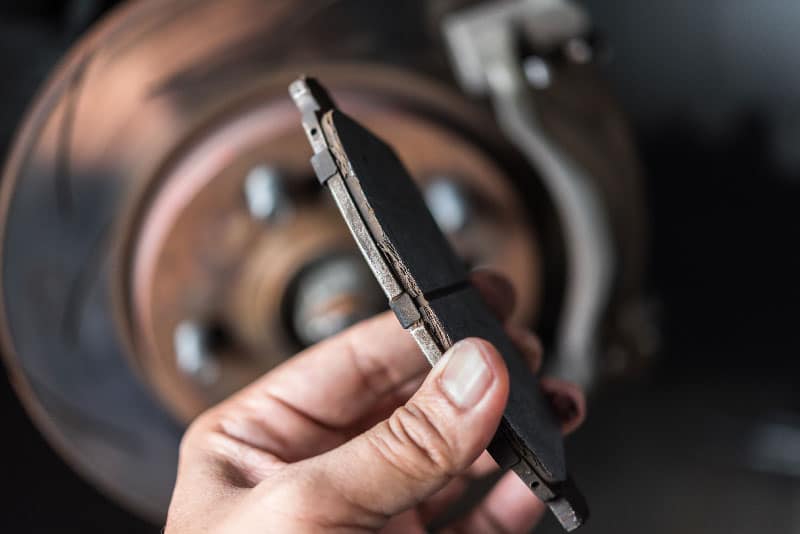

Brake disc up close

How to Recognize Early Signs of Brake Wear

Brake wear is one of the more predictable maintenance items on any vehicle — brakes are designed to wear, and most of the time they give clear signals when they're approaching the end of their useful life. The challenge is knowing what those signals look and sound like, and understanding what they indicate about the state of the braking system.

This guide walks through the common indicators of brake wear, explains what's happening mechanically when each symptom appears, and outlines when it makes sense to have the system professionally inspected.

How Disc Brakes Work

Most modern vehicles use disc brakes on at least the front axle, and many have them on all four corners. The system is straightforward in principle: when you press the brake pedal, hydraulic pressure moves pistons inside a caliper, which clamp brake pads against a rotating disc (rotor) attached to the wheel hub. The friction between pad and rotor slows the vehicle.

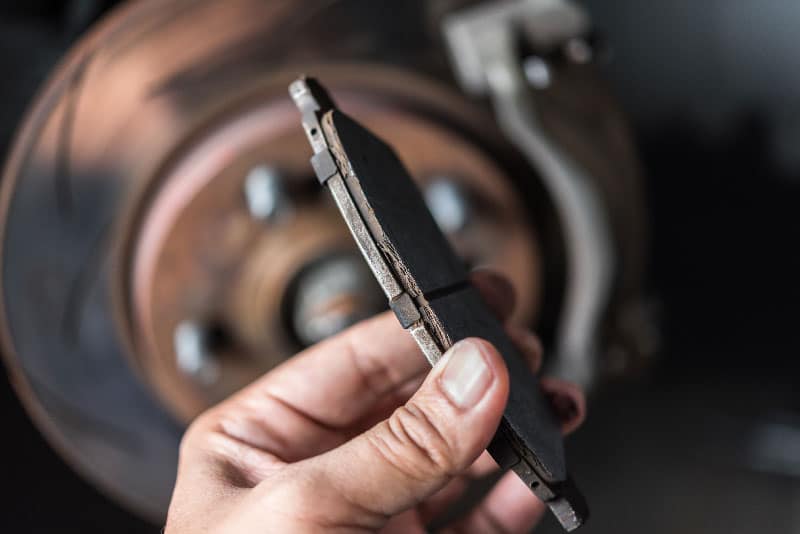
Brake pads are a friction material bonded to a metal backing plate. They're designed to be the sacrificial component in this system — softer than the rotor, so they wear preferentially rather than damaging the disc. When the friction material wears thin, the brake's ability to generate stopping force decreases, and warning indicators become more prominent.

Noise: The Most Common Early Warning

Most brake pads include a wear indicator — a small metal tab positioned so that when the pad friction material wears to a predetermined thickness, the tab contacts the rotor surface and produces a high-pitched squeal. This sound is intentional. It's designed to be audible to the driver under normal driving conditions, prompting a service inspection.

The squealing is typically most noticeable during light braking or when the brakes are first applied after starting the vehicle. It tends to be intermittent at first and more consistent as wear progresses.

If this sound has gone unaddressed for a significant period, the friction material may have worn completely through, and the metal backing plate is now contacting the rotor directly. This produces a grinding or growling sound — deeper and more harsh than the squeal. At this stage, the rotor surface is being damaged and will likely require replacement in addition to new pads.

Not all brake noise is wear-related. Some brake dust accumulation, particularly in wet weather, can cause brief squealing when the brakes are first applied. Brakes that sit unused for several days may produce a light grinding sound as surface rust is cleared from the rotor. These sounds typically disappear after one or two brake applications and are not cause for concern on their own.

Brake system inspection

Pedal Feel and Response

Changes in how the brake pedal feels underfoot can indicate several different conditions worth investigating.

Soft or Spongy Pedal

A pedal that compresses more than usual before the brakes engage, or that feels soft and yielding rather than firm, often points to air or moisture in the hydraulic system. This can happen when brake fluid becomes heavily contaminated with moisture, when a brake line or hose develops a small leak, or when a caliper seal allows fluid to bypass internally. A soft pedal reduces the force transmitted to the brakes and can increase stopping distances.

Pedal Pulsation

A pulsating or vibrating pedal during braking — sometimes accompanied by a vibration felt through the steering wheel — usually indicates rotor runout or thickness variation. Rotors can develop slight warping or uneven wear over time, particularly if they're subjected to heavy heat cycles (repeated hard braking from high speed, or driving in mountainous terrain). As the rotor surface passes unevenly against the brake pad, the pedal pulses in rhythm with the wheel rotation.

High Pedal, Then Normal

If the first press of the pedal feels high or resistant, then subsequent applications feel normal, this can sometimes indicate that a caliper piston is not retracting fully between applications — a sign that the caliper may be binding or beginning to stick.

Pulling to One Side

If the vehicle pulls to the left or right when the brakes are applied, the most likely cause is uneven braking force between the two wheels on the same axle. A seized caliper on one side can cause the brake to apply with more or less force than its counterpart, pulling the vehicle toward the side with greater braking force.

Pulling during braking can also be caused by brake fluid contamination in one caliper, uneven pad deposits on the rotor, or a collapsed flexible brake hose that's restricting fluid flow to one wheel. All of these situations warrant inspection.

Pulling to one side under braking is worth taking seriously. It means the braking force across an axle isn't balanced, which affects both stopping distance and directional control.

Visual Checks You Can Do Yourself

On many vehicles, you can see the brake pad thickness through the wheel spokes without removing the wheel. Looking through the spokes, you'll see the outer brake pad pressed against the rotor. Most pads have around 10–12mm of friction material when new. When that figure drops to around 3mm, replacement is typically recommended. If the pad looks very thin — less than the width of a pencil eraser — it's time for service.

You can also visually inspect the rotor surface for scoring, deep grooves, or an uneven wear ring. Light surface discolouration is normal. Deep grooves, cracking, or a lip at the outer rotor edge that's notably raised above the braking surface are signs of significant wear.

When to Have Brakes Professionally Inspected

The following situations indicate it's time for a brake inspection:

  • Persistent squealing or squeaking when braking
  • Any grinding or growling noise during braking
  • Vehicle pulls to one side when brakes are applied
  • Pedal feels soft, spongy, or travels further than usual
  • Pedal or steering wheel vibrates during braking
  • Brake warning light is illuminated
  • Vehicle has not had brakes inspected in over two years

Brakes are a safety-critical system. The consequences of delayed service are predictable — worn friction material, damaged rotors, and reduced stopping ability. Catching wear early typically means a less involved repair and better overall system condition at the time of service.

If you've noticed any of the above symptoms, we recommend booking an inspection sooner rather than later. A brake check is a straightforward service, and a thorough inspection takes less than an hour.

Vehicle inspection process

What to Expect During a Full Vehicle Inspection

A full vehicle inspection is one of the most useful things you can do for a vehicle you're considering buying, a car that's been sitting unused for an extended period, or a daily driver that hasn't been through a comprehensive check in a while. It gives you a documented picture of the vehicle's actual condition across all major systems.

Many people have a loose idea of what an inspection involves but aren't sure what specifically gets checked, how findings are communicated, or what the output of an inspection looks like. This article walks through the process in detail.

The Purpose of a Full Inspection

A routine oil change includes a visual check of a few fluid levels and a look at tires and lights. A full inspection is considerably more thorough — it covers the braking system, suspension, steering, drivetrain, engine, transmission, electrical systems, body and undercarriage, and safety equipment. It typically takes between 90 minutes and two-and-a-half hours depending on the vehicle and what's found.

The goal is to give the vehicle owner an accurate, documented picture of what the vehicle needs right now, what is showing early signs of wear but doesn't yet require action, and what is in acceptable condition. This structure helps you plan and prioritize — not every finding requires immediate repair, and a good inspection report distinguishes between the two clearly.

What Gets Checked: A System-by-System Overview

Engine and Fluids

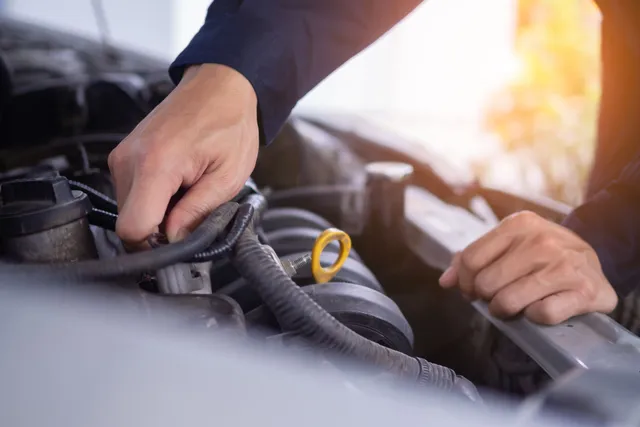
The inspection begins with the engine bay. The technician checks all fluid levels — engine oil, coolant, brake fluid, power steering fluid (where applicable), and windshield washer fluid. Each fluid's condition is assessed visually: engine oil for colour and consistency, coolant for signs of contamination or low pH, brake fluid for moisture content using a test probe.

Belts and hoses are inspected for cracking, glazing, and wear. The battery terminals are checked for corrosion, and the battery is load-tested to determine its remaining capacity. A scan of the onboard diagnostic system is performed to retrieve any stored or pending fault codes, which can point to sensor faults, emissions issues, or engine management concerns that haven't yet produced a visible warning light.

Engine bay inspection

Brakes

All four corners are inspected. Brake pad thickness is measured at each wheel. Rotor thickness is measured and compared against the manufacturer's minimum specification — a rotor can be resurfaced to a point, but below a certain thickness it can no longer reliably absorb braking heat without warping. Rotors are also inspected for scoring, heat cracks, and rust build-up.

Calipers are checked for leaks, binding, and proper operation. Brake lines and flexible hoses are inspected visually for corrosion, cracking, or signs of weeping. The brake fluid condition check performed in the engine bay feeds into the overall brake system assessment.

Suspension and Steering

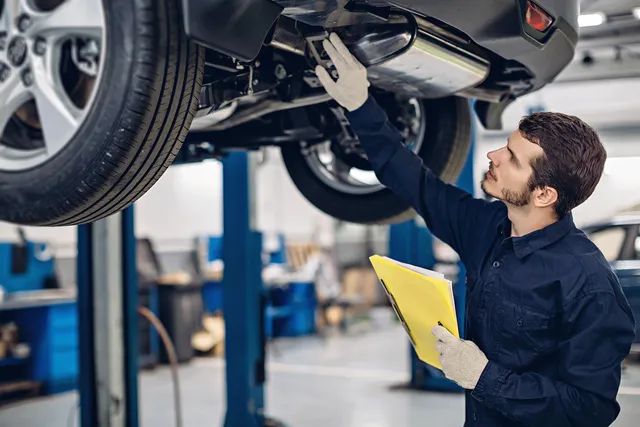
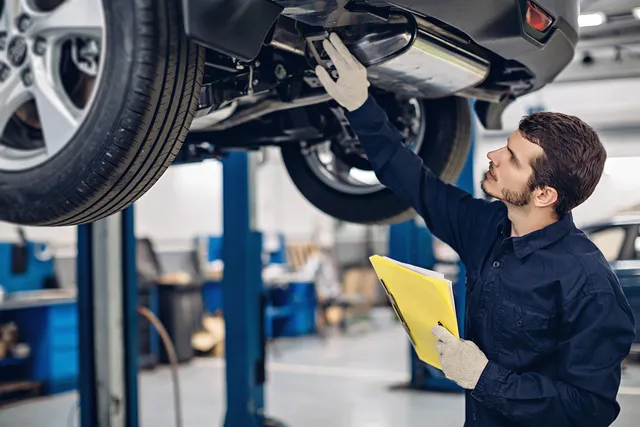
With the vehicle raised on a lift, the technician can inspect the full undercarriage. Suspension components — struts, shock absorbers, springs, control arms, bushings, and sway bar links — are inspected for leaks, cracks, and wear. Ball joints are checked for play. Tie rod ends are assessed for looseness that could affect steering precision.

Wheel bearings are checked by rocking each wheel to feel for play, and by spinning each wheel to listen for bearing noise. CV axle boots are inspected for cracks or tears — a torn boot allows the grease inside to escape and contaminants to enter, accelerating wear on the CV joint itself.

Where the vehicle has a power steering system, the rack, pump, and lines are inspected. Vehicles with electric power steering are assessed through the diagnostic system for any stored faults.

Tires and Wheels

Each tire's tread depth is measured at multiple points across the tread face. Uneven wear patterns — more wear on the inner or outer edge, or a scalloped appearance — can indicate alignment or suspension issues. The sidewalls are checked for cracking, bulging, or impact damage. Tire age is also noted, as rubber compounds degrade over time even on tires with adequate tread depth.

Wheel condition is checked visually, and lug nut torque may be verified if there's any reason to suspect the wheels have been removed recently without proper re-torquing.

Uneven tire wear is one of the most useful indicators a technician has — it can point to misalignment, worn suspension parts, or inflation issues that wouldn't otherwise be obvious during a visual check.

Exhaust System

With the vehicle raised, the exhaust system is inspected from the manifold to the tailpipe. The technician looks for rust, cracks, loose or missing hangers, and any evidence of leaks at pipe joints or gaskets. An exhaust leak, depending on its location, can affect engine performance or allow exhaust gases to enter the passenger compartment, which is a safety concern.

Electrical and Lighting

All exterior lights are tested — headlights (high and low beam), brake lights, turn signals, reverse lights, and marker lights. Interior lighting, horn function, and wiper operation are checked. Where the vehicle has a charging system issue or battery concern identified earlier in the inspection, more detailed electrical testing is performed.

Body and Structural

A visual inspection of the body and undercarriage looks for evidence of significant rust, prior collision damage, or frame concerns. On a pre-purchase inspection, this assessment is particularly important — welded repairs, mismatched panel gaps, or areas of fresh paint over existing damage can indicate a prior collision that may or may not have been properly repaired.

How Findings Are Communicated

A well-organized inspection report is grouped by urgency. Items that affect safety or are already past their service point are noted separately from items that are showing early wear and will need attention within the next year, and both are distinguished from components that are in acceptable condition. This format makes it easier to plan what needs to happen at this appointment versus what you can plan for later.

Any findings of note are explained in plain terms. If a technician sees a suspension bushing that's cracked but not yet causing a handling concern, they should be able to explain what that component does, what the early cracking means for its remaining service life, and what the expected timeline is before it becomes a functional problem.

A full inspection doesn't obligate you to any repair work. Its purpose is to give you information. What you choose to do with that information is your decision — which is how we believe it should work.

Pre-Purchase Inspections Specifically

If you're considering buying a used vehicle, a pre-purchase inspection from an independent shop is one of the most practical steps you can take. It's worth arranging regardless of the vehicle's age, mileage, or the reputation of the seller.

A few things the inspection will look for that are particularly relevant in a purchase context: evidence of prior collision damage beyond what the seller has disclosed, deferred maintenance that will require investment shortly after purchase, and any mechanical concerns that might affect the value of the vehicle or its negotiated price.

The cost of a pre-purchase inspection is modest relative to the cost of a used vehicle. The information it provides is difficult to obtain any other way before signing a purchase agreement.

If you'd like to arrange an inspection — whether for your own vehicle or one you're considering buying — we're happy to discuss what's involved and give you an accurate timeframe based on the specific vehicle.

Questions About Your Vehicle?

Get in touch — we're happy to talk through what you've noticed and whether it warrants a service appointment.